Turkey has emerged as one of the world’s most important exporters of construction materials, supplying everything from cement and steel to ceramic tiles and natural stone to over 200 countries. For international buyers, project developers, and procurement managers, Turkey offers a rare combination of competitive pricing, proven quality certifications, and strategic logistics access to Europe, the Middle East, Africa, and Central Asia. This guide covers the ten most important categories of Turkish construction materials and explains why each one deserves a place in your sourcing strategy.
1. Cement & Clinker
Turkey is the world’s fifth-largest cement producer, with an installed capacity exceeding 90 million tonnes per year. Turkish cement plants — many operated by global groups like Limak, Oyak, and Votorantim — meet EN 197-1 European standards and carry CE marking as standard. The product range covers CEM I (Portland), CEM II (composite), white cement, and sulphate-resistant variants.
For wholesale buyers, the pricing advantage is significant. FOB prices for CEM I 42.5R from Turkish ports typically run 15–25% below Western European equivalents, while quality remains on par. Turkey’s coastal cement plants at Mersin, Iskenderun, and Izmir offer direct bulk vessel loading, which keeps freight costs low for buyers in North Africa, the Gulf, and Sub-Saharan Africa.
Key export volumes: Turkey exported approximately 12 million tonnes of cement and clinker in 2025, making it the third-largest cement exporter globally after Vietnam and Thailand.
2. Steel & Rebar
Turkey ranks among the top ten steel-producing nations, with annual crude steel output of around 35 million tonnes. The country is especially strong in long products — rebar, wire rod, sections, and merchant bars — which account for the majority of construction steel demand worldwide.
Turkish rebar (B420C and B500C grades) is manufactured to TS 708 and EN 10080 standards. Major producers like Kardemir, Isdemir, and Colakoglu operate modern electric arc furnaces that produce consistent, high-quality product with full mill test certificates.
- Rebar: FOB prices from Iskenderun typically range from $520–$620 per tonne, competitive with CIS and Far Eastern suppliers.
- Wire rod: SAE 1006/1008 grades are widely available for downstream drawing and mesh production.
- Structural sections: HEA, HEB, IPE, and UPN profiles are produced to EN 10025 by Kardemir and Habas.
Turkey’s steel sector benefits from scrap availability through its extensive ship-breaking and recycling industry, which helps keep raw material costs competitive without sacrificing quality.
3. Ceramic Tiles & Porcelain
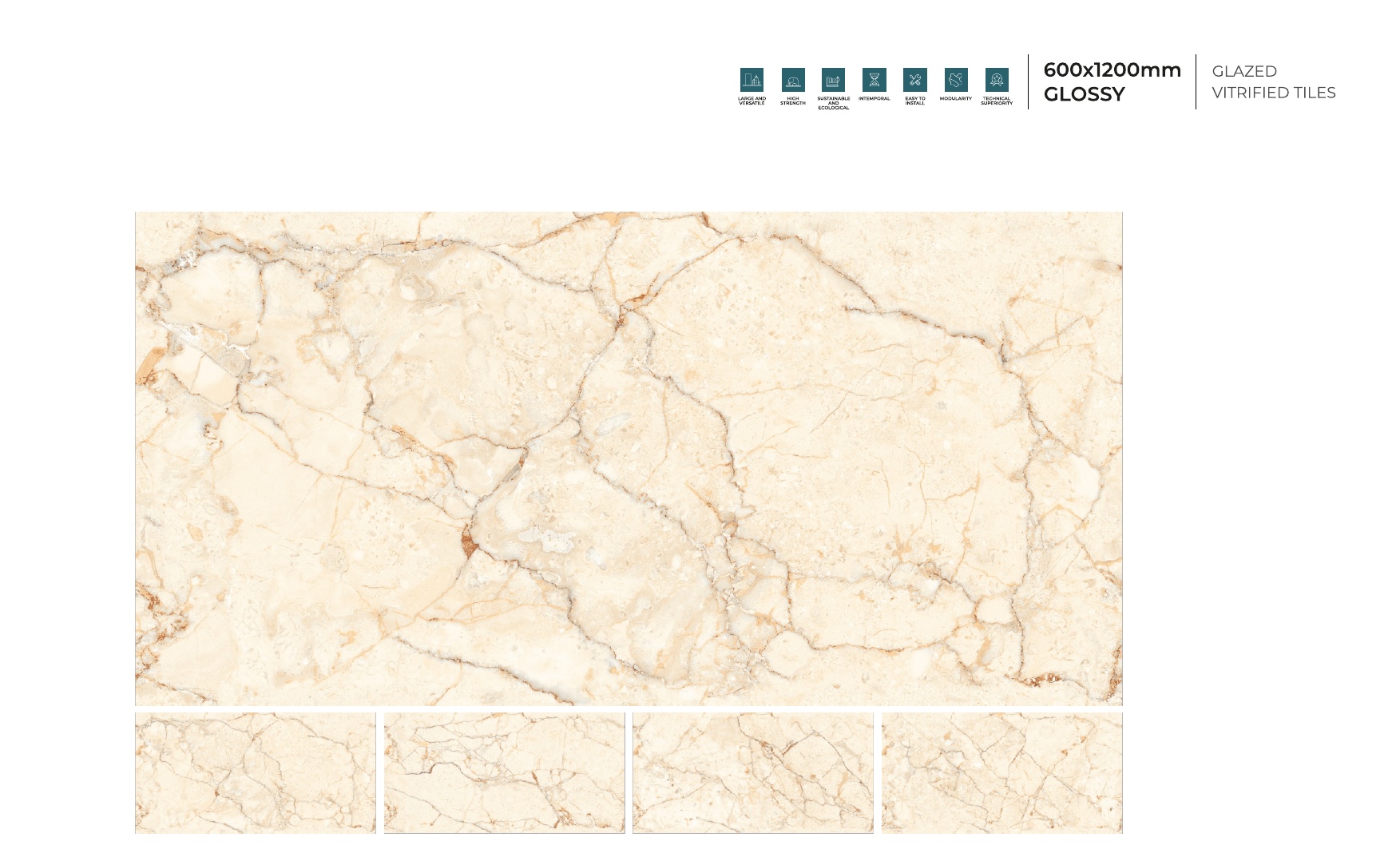
Turkey is the world’s eighth-largest ceramic tile producer and a top-five exporter. Companies like Kale, VitrA, Bien, and Ege Seramik operate state-of-the-art kilns producing everything from large-format porcelain slabs (120×240 cm) to traditional subway tiles and decorative mosaics.
The competitive edge for wholesale buyers lies in design versatility and price positioning. Turkish ceramic factories invest heavily in digital printing technology, which allows them to replicate marble, wood, and concrete textures at a fraction of the cost of natural materials. Average FOB prices for 60×60 cm porcelain floor tiles range from $4.50–$7.50 per square metre, depending on finish and thickness.
All major Turkish tile manufacturers hold ISO 13006 and EN 14411 certifications, and many carry additional green building credentials for LEED and BREEAM projects.
4. Adhesive Mortars & Chemical Building Products
The Turkish dry-mix mortar industry has grown rapidly, led by companies like Betek (Nippon Paint Group), Marshall, Dalyan, and Teknobond. Product categories include tile adhesives (C1, C2, C2S1 classifications per EN 12004), self-levelling compounds, waterproofing membranes, and thermal insulation render systems (ETICS/EIFS).
For international buyers, Turkish adhesive mortars offer a cost advantage of 20–35% compared to Western European brands, with identical CE certification and ETA approvals. Packaging options range from 5 kg retail bags to 1-tonne bulk bags, and most manufacturers provide private-label services for distributors looking to build their own brand.
5. Prefabricated & Steel Structures
Turkey’s prefab construction industry serves projects across Africa, the Middle East, and Central Asia. Companies like Dorce, Hekim, and Karmod manufacture modular buildings, container offices, worker camps, school units, and hospital modules that ship flat-packed in standard containers and assemble on-site in days.
Turkish prefab structures are particularly attractive for:
- Mining camps & oil field accommodations: Turnkey worker housing with integrated HVAC, plumbing, and electrical systems.
- Emergency & disaster relief housing: Turkey’s experience with earthquake response has produced rapid-deployment housing systems recognised by UNHCR and international aid organisations.
- Commercial & industrial buildings: Pre-engineered steel buildings (PEB) with spans up to 60 metres for warehouses, factories, and retail centres.
Pricing for a basic 20 m² modular unit starts from approximately $3,500 FOB, with delivery timelines of 4–6 weeks for standard configurations.
6. Thermal & Acoustic Insulation
Energy efficiency regulations in Europe, the Gulf, and North Africa are driving demand for quality insulation, and Turkey is well-positioned to supply it. Major manufacturers include Izocam (Saint-Gobain Group), Hekim Yapı, and Betek.
Product categories exported in volume include:
- EPS (Expanded Polystyrene): Densities from 12 to 30 kg/m³, used in ETICS facade systems and under-slab insulation.
- XPS (Extruded Polystyrene): Moisture-resistant boards for foundations, inverted roofs, and cold storage facilities.
- Rock wool: Non-combustible panels and rolls for fire-rated walls, acoustic partitions, and industrial pipe insulation.
- Glass wool: Lightweight rolls and batts for pitched roof and HVAC duct insulation.
Turkish insulation products carry CE marking under EN 13163 (EPS), EN 13164 (XPS), and EN 13162 (mineral wool), ensuring acceptance across EU markets without additional testing.
7. PVC Pipes & Fittings
Turkey’s plastic pipe industry is one of the largest in Europe, with companies like Pilsa, Pimtas, Hakan Plastik, and Ege Yapı producing a full range of PVC-U, PE, PP-R, and corrugated pipe systems for water supply, sewage, irrigation, and gas distribution.
For infrastructure projects in Africa and the Middle East, Turkish PVC pipes offer a compelling value proposition: TS and EN standard compliance, competitive pricing (typically 15–30% below EU manufacturers), and large production capacities that can fulfil multi-thousand-tonne orders within 3–4 weeks.
Corrugated double-wall SN8 pipes for storm drainage and sewage systems are a particularly strong export category, with Turkish manufacturers supplying major municipal infrastructure projects across the MENA region.
8. Flat Glass & Processed Glass
Sisecam, Turkey’s glass giant and one of the world’s top five flat glass producers, anchors this sector. Turkish glass exports include float glass, tempered glass, laminated safety glass, low-E coated glass for energy-efficient facades, and insulated glass units (IGU).
For construction buyers, Turkish processed glass is competitive because Sisecam and other processors like Turkiye Sise operate vertically integrated facilities — from raw float glass production through cutting, tempering, laminating, and coating — which reduces lead times and ensures quality consistency. FOB prices for 4 mm clear float glass typically start from $3.50–$4.50 per square metre.
9. Paint & Coatings
Turkey’s paint and coatings industry, led by Marshall (AkzoNobel), Betek (Nippon Paint), Polisan, and DYO, produces a comprehensive range of architectural, industrial, and protective coatings. Total production capacity exceeds 800,000 tonnes per year, making Turkey one of the largest paint markets in the EMEA region.
Wholesale buyers benefit from:
- Competitive raw material access: Turkey’s calcium carbonate and mineral reserves support local filler and pigment production.
- Full product range: Interior and exterior emulsions, texture coatings, epoxy floor systems, polyurethane topcoats, and marine-grade anti-corrosion paints.
- Private-label capability: Most major manufacturers offer OEM/ODM services, allowing distributors to source Turkish-made paint under their own brand.
Export pricing for interior acrylic emulsion paint (15 L pails) typically ranges from $15–$25 per pail FOB, depending on quality tier and order volume.
10. Natural Stone
Turkey is the world’s largest exporter of natural stone by volume and the second-largest by value. The country’s geological diversity produces marble, travertine, limestone, granite, and onyx from over 1,500 active quarries across Anatolia. Key quarrying regions include Afyon, Bilecik, Burdur, and Denizli.
For construction projects, Turkish natural stone is used in:
- Facade cladding: Cut-to-size marble and limestone panels for commercial and residential exteriors.
- Interior flooring: Polished marble and honed travertine for lobbies, corridors, and living spaces.
- Landscaping: Tumbled travertine pavers, split-face wall cladding, and cobblestone for outdoor areas.
- Countertops & vanities: Turkish marble competes directly with Italian and Spanish stone at 30–50% lower pricing.
Turkey exported over $2 billion worth of natural stone in 2025, with the USA, China, Saudi Arabia, and the UK as leading destination markets. FOB pricing for standard marble tiles starts from $15–$25 per square metre depending on material and finish.
Why Source Construction Materials from Turkey?
Beyond the individual product categories, several structural advantages make Turkey an attractive sourcing hub for construction materials:
- Strategic location: Turkey sits at the crossroads of Europe, Asia, and Africa. Major export ports at Mersin, Izmir, Iskenderun, and Istanbul offer competitive container and bulk vessel rates to virtually any global destination.
- Quality certifications: Turkish manufacturers widely adopt CE marking, ISO 9001, ISO 14001, and sector-specific EN standards. Many factories hold additional certifications for green building systems (LEED, BREEAM).
- Currency advantage: The Turkish lira’s depreciation against the US dollar and euro has made Turkish products even more price-competitive for international buyers without a corresponding drop in manufacturing quality.
- Trade agreements: Turkey’s customs union with the EU and free trade agreements with numerous countries simplify import procedures and reduce tariff burdens.
- Experienced exporters: Turkey’s construction materials sector has decades of export experience. Most manufacturers have dedicated English-speaking export departments, accept standard payment terms (LC, TT), and provide full documentation for customs clearance.
Need Help Sourcing Turkish Construction Materials?
Whether you need cement, steel, ceramics, or natural stone, OrderFromTR connects you with verified Turkish manufacturers and handles procurement logistics from factory to port.
Browse Products Request a QuoteRelated Articles
Step-by-Step Guide to Importing Natural Stone from Turkey
Read Article